
Asian market's appetite for turtle meat threatens Alabama's population
Published: Sunday, February 26, 2012, 6:12 AM Updated: Tuesday, February 28, 2012, 2:16 PM
By Ben Raines, Press-Register Press-Register
http://blog.al.com/live/2012/02/asian_appetite_threatens_alaba.html
MOBILE, Alabama -- The Mobile-Tensaw Delta ranks as one of the two or three most diverse places on the planet for turtles, home to 18 freshwater species.
But that diversity is under threat, scientists say, because weak regulations are drawing commercial harvesters from as far away as Maine to Alabama’s turtle-rich swamps.
Two Auburn herpetologists have warned the state Conservation Advisory Board that the state’s turtle populations are under siege. Craig Guyer, an Auburn professor, and Jim Godwin, with the Alabama Natural Heritage Program, said the market for turtle meat is fueled by demand in Asian countries where native populations have been decimated by years of overharvest. In addition, some turtles native to Alabama bring hundreds of dollars apiece when sold as exotic pets.
The scientists said stricter regulations, including a total ban on the commercial take of wild-caught turtles, would be the only way to lessen or eliminate the threat.
“That’s why China wants our turtles,“ said Mark Sasser, non-game wildlife coordinator with the state Conservation and Natural Resources department. “They’ve eaten all of theirs.”
A report from the Turtle Conservation Coalition states that 75 percent of Asia’s turtle and tortoise species are threatened as a result of overharvesting.
Increasingly, U.S. turtles are being shipped abroad to satisfy the Asian demand.
In 2008, Florida wildlife officials estimated that about 3,000 pounds of live softshell turtles caught in the swamps of the Sunshine state were shipped out of the Tampa airport each week, destined for China. Former Florida Gov. Charlie Crist pushed for much stricter limits on harvest after wildlife officials there reported encountering a pair of turtle harvesters who had filled the entire bed of their pickup with turtles.
Up until the late 1990s, Sasser said, most states didn’t have commercial freshwater turtle harvest regulations because there wasn’t any need for them. As the foreign appetite began to grow, Alabama tried to stay ahead of the problem, first by implementing a 10-turtle-per-person commercial daily limit, then with a reporting system for turtle farmers and commercial dealers.
No harvest is allowed of a handful of species, such as the endangered Alabama red-bellied turtle.
Turtle hobbyists or people who may catch a few on a trotline can keep or possess no more than three turtles per day.
Sasser said the free commercial permit is available to out-of-state residents and there is no license or residency requirement for recreational catches, meaning Alabama’s waters are open to anyone.
Sasser said such open access means the state has no idea how many turtles are being caught each year, and enforcement of the few rules on the books is difficult.
Commercial harvesters “do a lot of their work at night. They don’t go out of their way to get checked,” Sasser said.
While legitimate turtle farms generally follow the commercial permit’s harvest-reporting requirements, there have been a lot of non-compliance issues, he said.
“You know that old saying, figures don’t lie, but liars can figure? That’s what we’ve been dealing with,” he said. “There’s been a lot of what we believe is incorrect information.”
In addition to the Asian market for turtle meat, turtle parts are used there for medicinal purposes.
There is also a thriving worldwide trade in exotic turtles as pets.
Rare Alabama turtles such as the black-knobbed sawback command as much as $269 on various turtle websites, such as TurtleShack.com. Even the common snapping turtle can command prices above $200 in the pet industry.
Freshwater turtles are long-lived, slow-growing and take many years to reach sexual maturity. Coupled with fairly high mortality among baby turtles, the reptiles are highly vulnerable to overharvest.
“Most states in the Southeast have no turtle population monitoring system because there’s no economically feasible way to do it. That means that a turtle population can be in trouble long before we know it,” he said.
The problem in Alabama grows more serious with every new restriction placed on turtle harvest in another state.
“We have some of these turtle catchers coming all the way from Maine. They’re very mobile. They hire people in the area to catch the turtles,” Sasser said. “Some of these turtles being caught for their meat are bringing $25 or $30 apiece and they can ship thousands of them every week.
“There’s no overhead, no license requirements and there’s no expense to keep and feed them. They put them in a box and ship it.”
Turtle laws have been strengthened in neighboring states in recent years. Tennessee began prohibiting commercial harvest of most turtle species in the mid-1990s. Florida banned commercial harvest from public and private waters in 2009. Georgia severely restricted commercial harvest of wild-caught turtles last year.
Sasser said there are legitimate turtle farming operations.
“I had one turtle farmer tell me that he’s selling hatchlings to the Asians who then feed them out to slaughter in one year. If a turtle farmer can sell hatchlings for $10 apiece and is shipping 40,000 to 50,000 hatchlings a year, you do the math.
“If they’ve already got their brood stock and can turn a profit with what they already have, we have no problem with that,” he said. “We do have a problem with someone going to the Alabama River or Tennessee River and catching our native wild turtles, then shipping them overseas for a huge profit and depleting our population.
“It’s already happened in Asia and will happen here without stricter measures.”
After the Auburn herpetologists made their appeal to the conservation board this month, Wildlife and Freshwater Fisheries officials said the agency would review the state’s turtle laws. The agency could make recommendations on the commercial and recreational harvest at the next Conservation Advisory Board meeting on March 10 in the Capital Auditorium in Montgomery.
_____
Press-Register reporter Jeff Dute contributed to this report.
Updated on Tuesday, Feb. 28, to correct an error in the headline.
© 2012 al.com. All rights reserved.
Wednesday, February 29, 2012

Tuesday, February 28, 2012
Feral Swine Season - March 1 - 14 - Black Warrior WMA
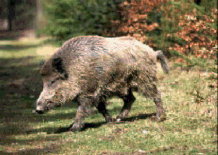
Feral Swine Season on the Black Warrior Wildlife Management Area is scheduled for March 1 - 14. Visit http://www.outdooralabama.com/ for more information on feral swine control and hunting opportunities.
On the March 1 - 14 feral swine hunt on Black Warrior WMA, legal arms and ammunition include firearms and archery legal for deer season on the WMA. A license and map permit are required. Hunter orange is required. Feral swine may also be hunted on the WMA during any other open season with the legal arms and ammunition for that open season, for example during squirrel season with legal firearm for squirrel. There is no bag limit on feral swine. Hunters are encouraged to report their feral swine harvest at the WMA headquarters.
Feral hogs are nuisance animals that take a toll on native game animals, like deer and turkey, and cause extensive damage to the land and native plants. Local land managers and land owners use a combination of methods to control the expanding feral swine population.
Monday, February 27, 2012
"I'm with Phil" Documentary Film about the Town of Phil Campbell and April Tornadoes
This article in the Times Daily details a documentary film titled "I'm with Phil" that was created by Andrew Reed, a Phil Campbell native. The film tells the story of the Phil Campbell Convention and the April 27th tornadoes. Below is the three minute trailer for the movie:
Thursday, February 23, 2012
Arbor Week Tree Give Away Big Success
 |
| Participant with "got trees?" t-shirt. |
The Annual Arbor Week Tree Sale was held at the Alabama Forestry Commission Office on February 23rd. WCNRC members present included Johnna Franks, John Creed, Mike Henshaw, Jim Hughes, Allison Cochran, and Chris Wright. Over 50 people participated in the Tree Give Away in the first hour alone, and approximately 1,000 trees were given away. The Arbor Week Tree Give Away will continue at a slower pace until the supply of seedlings is exhausted. Johnna prepared information sheets on each species of trees. Additional photos from the sale are in this photo album.
 |
| Young family looks over the information sheets for each species. |
 |
| Boxes containing free seedlings. |
 |
| A portion of the sign-in sheet after the first hour. |
Tuesday, February 21, 2012
Professional Logging Manager Initial Training Course In Haleyville

Follow this link for a printable registration form:

Bankhead Liaison Panel Meeting
The Bankhead Liaison Panel will meet on Thursday, February 23 at 6 p.m. at the Moulton Recreation Center. Everyone is invited to this public meeting. The agenda includes projects in the Rush-Brushy watershed; the Owl Creek Trail System assessment; and a report from the Restoration Monitoring Team.
For more information, call the Bankhead National Forest office at 205-489-5111.
For more information, call the Bankhead National Forest office at 205-489-5111.
Subscribe to:
Posts (Atom)